

Rebuilding Localization: General Translation’s $27M Leap
The Resilience of Translation Services in the Tech Industry
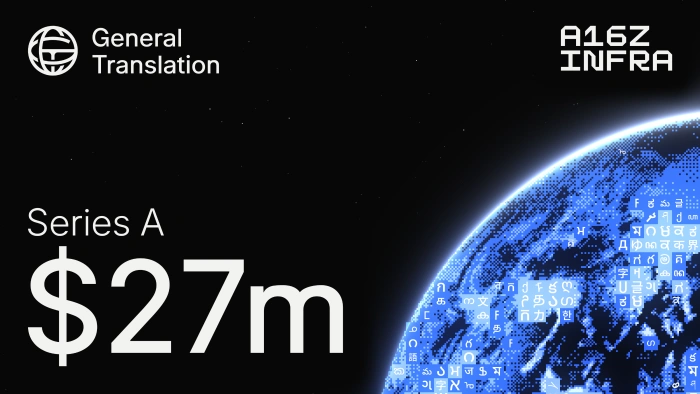
In an unprecedented move, General Translation, a budding startup in the translation and localization industry, has garnered considerable attention by securing USD 27 million in funding, led by the prominent venture capital firm a16z. This development, announced on November 12, 2026, marks a significant milestone not only for the company but potentially for the broader translation services market.
Funding Attraction: A Testament to Potential?
Historically, substantial investments in strictly translation service companies have been rare, compelling industry watchers to consider what this implies about the translation sector’s enduring potential. While the funding amount is a signal of confidence from financial backers, the investment also reflects sophisticated developments within the sector itself. General Translation claims to be "rebuilding the localization stack from the ground up,” suggesting that they may be addressing longstanding inefficiencies or introducing novel solutions conducive to modern business needs.
The Modern Localization Stack
The statement from General Translation about revamping the localization stack directly connects to challenges prevalent in the industry, such as integrating advanced technologies like machine learning, AI, and real-time translation capabilities. Their approach could signify a shift towards an increasingly tech-driven model of translation services, aimed at enhancing speed, accuracy, and automation.
This funding indicates that investors are betting on an evolved version of localization services where efficiency and scalability are paramount. Such improvements could elevate translation services to a more strategic position within enterprises, where translation becomes a seamless part of global content dissemination strategies, as opposed to an auxiliary task.
Implications for the Industry
The sizable funding for General Translation highlights the sustained relevance and potential growth of the translation sector in a tech-centric landscape. Unlike recent years where tech solutions predominantly took center stage, this investment suggests that the core translation services still hold substantial potential when integrated with innovative technologies.
The implications are manifold:
- Increased Competition: With attention drawn to General Translation's approach, other firms may intensify their R&D efforts to adopt similar advancements and attract further investment.
- Technological Integration: A successful integration of high-tech solutions into traditional translation services can lead to broader adoptions, possibly reshaping industry standards.
- Attractive to Tech Investors: As seen with a16z's involvement, tech investors may increasingly view translation services as appealing opportunities, spurring a new era of growth and innovation in the industry.
Limitations and Future Considerations
However, this optimism must be tempered by the acknowledgment of challenges that persist. Although funding is an encouraging sign, ultimate success depends on execution. The company's ability to deliver on its promises of a rebuilt localization stack will be critical in proving the value of their innovations. Moreover, competitors may quickly catch up or surpass these efforts, given the fast pace of technology evolution.
Crucially, while investment in companies like General Translation highlights potential, it does not guarantee wide-scale success or adoption. Market conditions, customer adoption, and technological adaptability will serve as fundamental determinants.
The $27 million funding secured by General Translation indeed reaffirms the translation service's potential as a valuable and evolving market in the modern global economy. As the industry continues to pivot toward greater technological integration, stakeholders—ranging from investors to service providers—must navigate this landscape with strategies that combine traditional linguistic precision with cutting-edge technology.
At LocReport, we keep our fingers crossed for General Translation's execution—rebuilding the localization stack is an ambitious undertaking, and true innovation elevates the entire industry.
Why this matters
- Increased competition may drive innovation in translation services.
- Technological integration could reshape industry standards.
- Attracting tech investors may spur growth in translation sector.