

Probabilistic AI, Models as Vendors, and the Evolving TMS
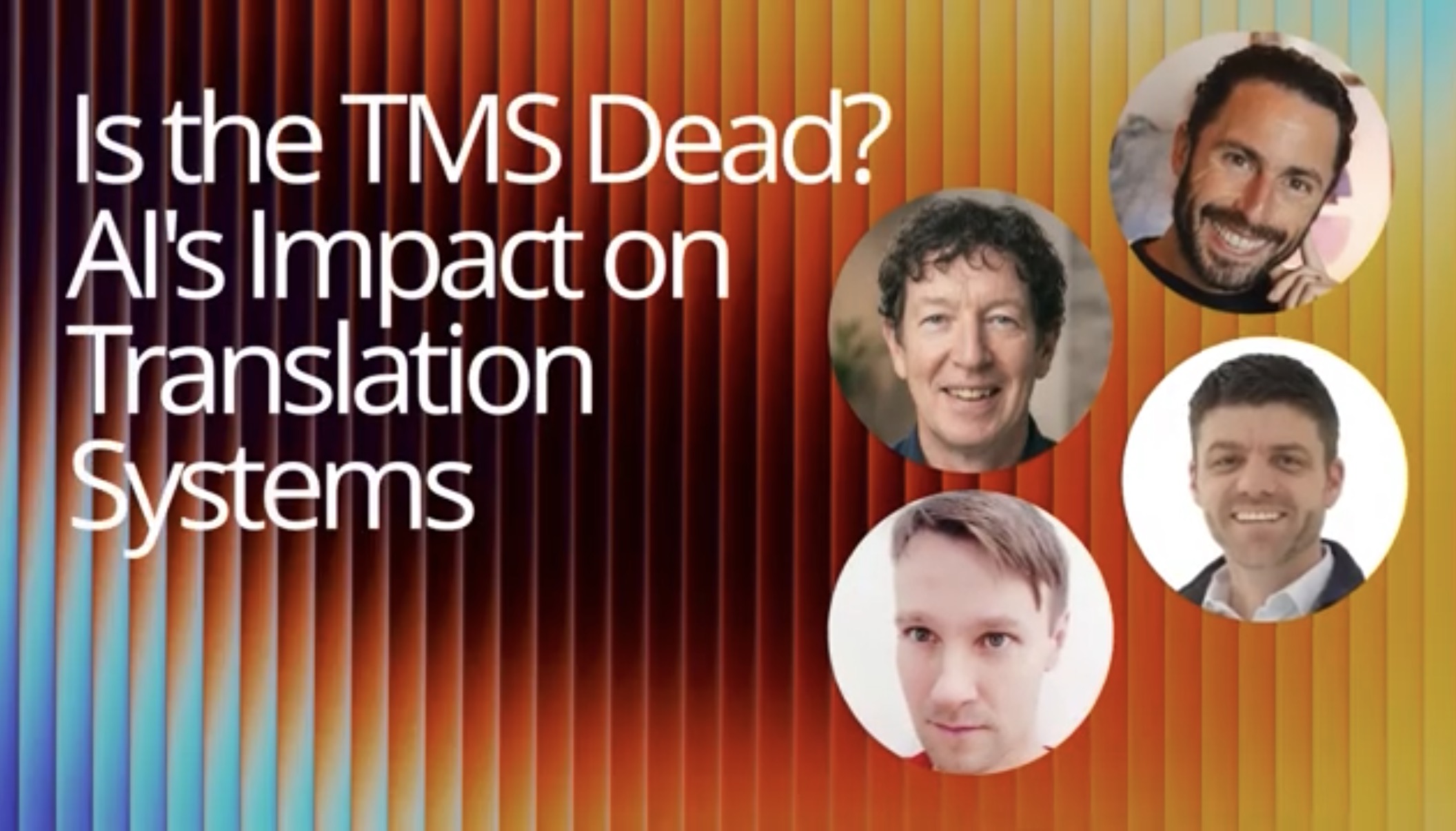
As artificial intelligence shifts localization workflows from deterministic software rules to probabilistic model outputs, enterprise language operations face fundamental questions about control, cost, and architecture. In a recent episode of The Signal Room Podcast, host Vincent Swan, VP of Innovation and Solutions at Centific, sat down with guests Istvan Lengyel (Founder and CEO of BeLazy), Gabriel Fairman (Founder and CEO of wxrks), and Jeff Kent (Director of Forward Engineering and Strategic Solutions at Centific) to analyze how AI is redefining orchestration, data infrastructure, and vendor management in translation operations.
Managing the Shift to Probabilistic AI
Traditional translation software was built on deterministic principles: clicking a specific button yielded a predictable, consistent output. Generative AI fundamentally disrupts this expectation by introducing probabilistic results that vary based on prompts and context. As Jeff Kent noted during the discussion, "People are becoming much more comfortable with imperfection in our industry."
However, this comfort level is far from uniform. While developers and end-users increasingly accept non-deterministic software, enterprise localization clients remain anxious about accuracy and predictability. To maintain control against an overwhelming volume of AI-generated content, enterprise buyers are leaning heavily into structured segmentation and file parsing. This dynamic forces localization leaders to manage the tension between leveraging flexible AI capabilities and enforcing strict operational control.
Treating AI Models as Billable Vendors
As generative models assume a central role in translation workflows, enterprise management frameworks must adapt to treat them as standard suppliers. Istvan Lengyel argued that AI models should be evaluated, tracked, and costed using the exact same ledger systems applied to human language service providers and freelance vendors.
"An AI vendor is a similar vendor... you need to know which model, when was it trained, what sort of context it was given," Lengyel stated. Managing an AI model requires tracking crucial metadata—including context windows, training recency, and specific model versions—just as vendor managers track resumes and credentials. Furthermore, computational expenses vary significantly based on contextual complexity; executing a translation run using a 200-page style guide incurs substantially higher token costs than a brief prompt asking to "translate it like Apple would."
Reimagining the TMS as an Orchestration Layer
Despite industry debates over whether the standalone TMS is becoming obsolete, the panel agreed that translation management systems will not disappear over the next 5 to 10 years. Instead, their role is evolving from a rigid, linear "Translation-Review-Deliver" tool into an orchestration layer and structured source of truth. Addressing common client complaints, Vincent Swan observed, "When I hear someone say 'I want no TMS', I actually in the back of my head am hearing 'I need a better TMS'."
Critics often conflate a translation management system with a translation memory system, overlooking essential infrastructure that generic AI tools cannot replicate. Specialized file filters for non-standard formats, desktop publishing adjustments for target text expansion (such as German text expansion), and specialized editors for complex scripts like Right-to-Left or Indic languages remain necessary. Modern TMS architecture will increasingly handle front-end decision-making—assessing content risk, forecasting token usage, and dynamically routing content between AI models and human specialists.
Reframing Human Agency and Operational Strategy
Attributing autonomous human agency to artificial intelligence distorts market accountability. Gabriel Fairman cautioned against treating AI as an independent actor, asserting, "It's not AI slop, it's human slop using AI as a tool to produce that slop." Viewing AI strictly as a tool controlled by human intent allows enterprise teams to build better governance systems. By offloading rigid, segment-by-segment processing to AI tools, human linguists can return to high-value creative work like transcreation and hyper-personalization.
To turn these architectural shifts into concrete strategy, the panel highlighted four key operational recommendations:
- Experiment with AI beyond velocity: Test AI models on novel operational tasks that expand team capabilities rather than simply executing legacy processes faster.
- Evaluate source content integrity upfront: Implement automated pre-translation validation checks to verify source file formatting and segmentation before triggering AI workflows.
- Audit system architecture for hybrid data: Structure data infrastructure so rigid relational databases work seamlessly alongside unstructured, vector-based AI environments.
- Engage directly with AI-forward partners: Pursue proactive consulting and hands-on experimentation rather than relying on passive, traditional service models.
Listen to the full conversation on Spotify or watch the episode on YouTube.
Intelligence
Why this matters
- AI models are becoming integral to translation workflows.
- Enterprise clients must adapt to probabilistic AI outputs.
- TMS systems are evolving into orchestration layers.
Keep independent coverage alive.
No ads. No paywall. No corporate backing. Just sharp, weekly intelligence on the language industry — free, because it should be.