

Multilingual GEO: Why Generative Engine Optimization Is the Next Frontier for Global Brands
For decades, digital marketing has operated on a straightforward playbook: optimize for search engines, run paid campaigns, rank at the top of Google, and drive clicks to a branded website where you control the story. However, the rise of AI-driven answer engines—such as ChatGPT, Claude, and Perplexity—is rapidly rewriting these rules.
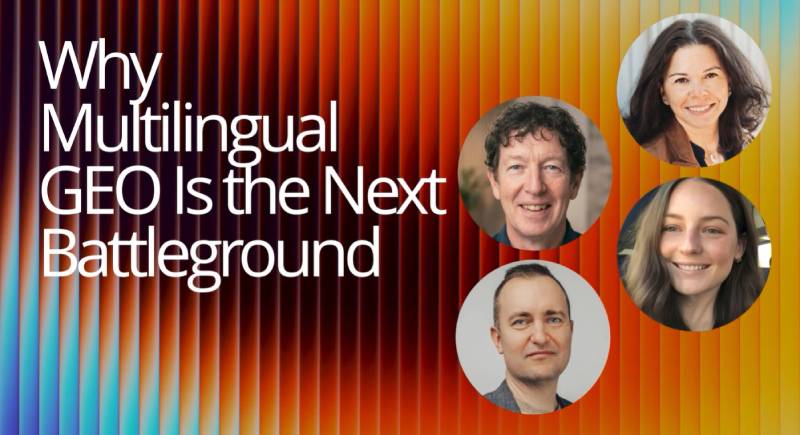
In a recent episode of The Signal Room Podcast (available on Spotify and YouTube), Wada'a Fahel, Jonas Ryberg, Vincent Swan, and Karina Welch explored how the industry is shifting from traditional Search Engine Optimization (SEO) to Generative Engine Optimization (GEO)—and why multilingual strategies will define the next competitive battleground.
The Rise of the AI-Mediated Brand
The foundational change in consumer search behavior lies in the transition from link retrieval to information synthesis. When asking an AI engine for complex recommendations—such as finding a hotel with specific architectural, location, and room-level nuances—the model does not simply present a list of links. It digests reviews, forums, Reddit discussions, third-party articles, and analyst coverage, delivering a synthesized summary in seconds.
This dynamic introduces what marketing experts call the AI-mediated brand. Because AI models evaluate third-party consensus across the web rather than relying solely on a company's carefully curated homepage, a brand’s website is no longer its primary narrative owner. Marketing is moving from direct control to strategic influence.
The Multilingual Paradox: How Language Shapes AI Reasoning
A critical dimension of GEO that global enterprises often overlook is the impact of prompt language on AI reasoning. In a practical test shared during the discussion, identical prompts asking AI chatbots to rank top localization companies were submitted in English, Swedish, and German.
The results were stark:
- Algorithmic Variance: The AI engines evaluated companies differently depending on the input language.
- Differing Perspectives: In English and Swedish, the models focused primarily on current market positioning. In German, the models evaluated future strategic potential, bringing entirely different companies into the top rankings.
This highlights a fundamental truth for global organizations: multilingual GEO is not merely translated SEO. AI models weigh local context, regional web presence, and language-specific sources differently. A brand that appears authoritative in English may be invisible or misrepresented when queried in German, Japanese, or Spanish.
Rewriting the Marketing Playbook: From Keywords to Authority
Transitioning from SEO to GEO requires a ground-up rethinking of content strategy and digital architecture:
- Structure for Extraction: Traditional web pages often hide answers deep within long promotional text. AI models typically prioritize the first 40–50 lines of a document. Content must lead with clear, structured answers before offering deep supporting proof.
- Leverage Knowledge Repositories: Unstructured documentation, technical libraries, GitHub repositories, and customer support bases—traditionally ignored by keyword-focused SEO—have become primary training grounds for Large Language Models (LLMs).
- Focus on Topic Authority: While SEO heavily relied on individual keyword targeting, GEO rewards deep, consistent authority across interconnected topics and third-party validation.
- Positioning vs. Trust: As AI platforms introduce advertising (with OpenAI hitting $1 billion in annualized ad revenue in under 200 days), brands may be tempted to buy visibility. However, as the podcast panel noted: you can buy positioning, but you cannot buy trust.
Governance and the Future of Brand Visibility
While AI referral traffic is already showing measurable growth—rising from zero to several percentage points of total web traffic for proactive brands—most enterprise organizations are still reacting to the current state rather than planning for long-term AI discovery.
The co-hosts agreed that multilingual GEO belongs squarely under marketing, supported by specialized external partners, localization experts, and dedicated analytics platforms. Brands that build structured knowledge assets and maintain equivalent, authoritative messaging across all operational languages will establish a significant competitive moat in the age of generative discovery.
Intelligence
Why this matters
- Shift from SEO to Generative Engine Optimization is critical.
- Multilingual strategies will redefine competitive advantage.
- AI-mediated brands require new content strategies.
Keep independent coverage alive.
No ads. No paywall. No corporate backing. Just sharp, weekly intelligence on the language industry — free, because it should be.